
Non-developers keep it alive
The question is never whether an AI can generate the first version. It is who changes it in month four. On Modulify that is anyone on the team, not whoever last understood the code.

Both turn a prompt into something real, both produce genuine code, and both let you take that code with you. They differ in what surrounds it. With Lovable the codebase is the product, and working on the site means working in the code. With Modulify the code comes with a platform around it, so content sits in a CMS, pages reuse the same sections, and the person who wants a change does not have to be the person who can ship a deploy. That barely shows on day one, and decides everything by month four.
Two good answers to different questions. Here is which question is yours.
| Capability | Modulify | Lovable |
|---|---|---|
| What you end up with | A running platform (pages, CMS, data, publishing, analytics) and the code behind it. | A generated codebase you own, deployed and synced to your own repository. |
| Who keeps it running after launch | Anyone on the team, visually or by describing the change. | Whoever is comfortable reading the code and shipping a deploy. |
| Changing copy and content | Content sits in CMS collections. A marketer edits a row and publishes. | Content usually lives in the code, so a copy fix means a prompt and a redeploy. |
| Consistency as the site grows | Shared sections, templates, and brand rules keep page twenty matching page one. | Each generation starts fresh, so consistency depends on how tightly you steer it. |
| SEO and marketing structure | Metadata, page structure, social previews, and sitemaps are part of the platform. | Entirely possible, but you build and then maintain all of it yourself. |
| Multiple languages | Built in. Per-language content fields with language tabs, and locale routing on the site. | Achievable in code, and yours to build and maintain. |
| Custom application logic | Database, storage, and accounts built in, plus server-side code and API calls when you need them. | Strong. Anything you can express in code, you can build. |
| Access to the code | Yours. Paid plans export the full source, the database, and your files, so a project can move whole. | Yours, synced continuously to a repository you control. |
| Polished marketing sites | The core use case. Design taste is built into what comes back. | Achievable, though its centre of gravity is application UI rather than marketing pages. |
| Best fit | Teams who need a site that markets and a product that works, run by non-developers. | Developers who want the codebase itself as the deliverable. |
What you end up with
Who keeps it running after launch
Changing copy and content
Consistency as the site grows
SEO and marketing structure
Multiple languages
Custom application logic
Access to the code
Polished marketing sites
Best fit
This comparison reflects each product’s publicly stated positioning and our own reading of where it is strongest. Lovable is a trademark of its owner and is not affiliated with Modulify. Products change quickly, so check anything that would decide your choice before you commit to it.
Everything here is about the months after launch, not the first afternoon.
Non-developers keep it alive
The question is never whether an AI can generate the first version. It is who changes it in month four. On Modulify that is anyone on the team, not whoever last understood the code.
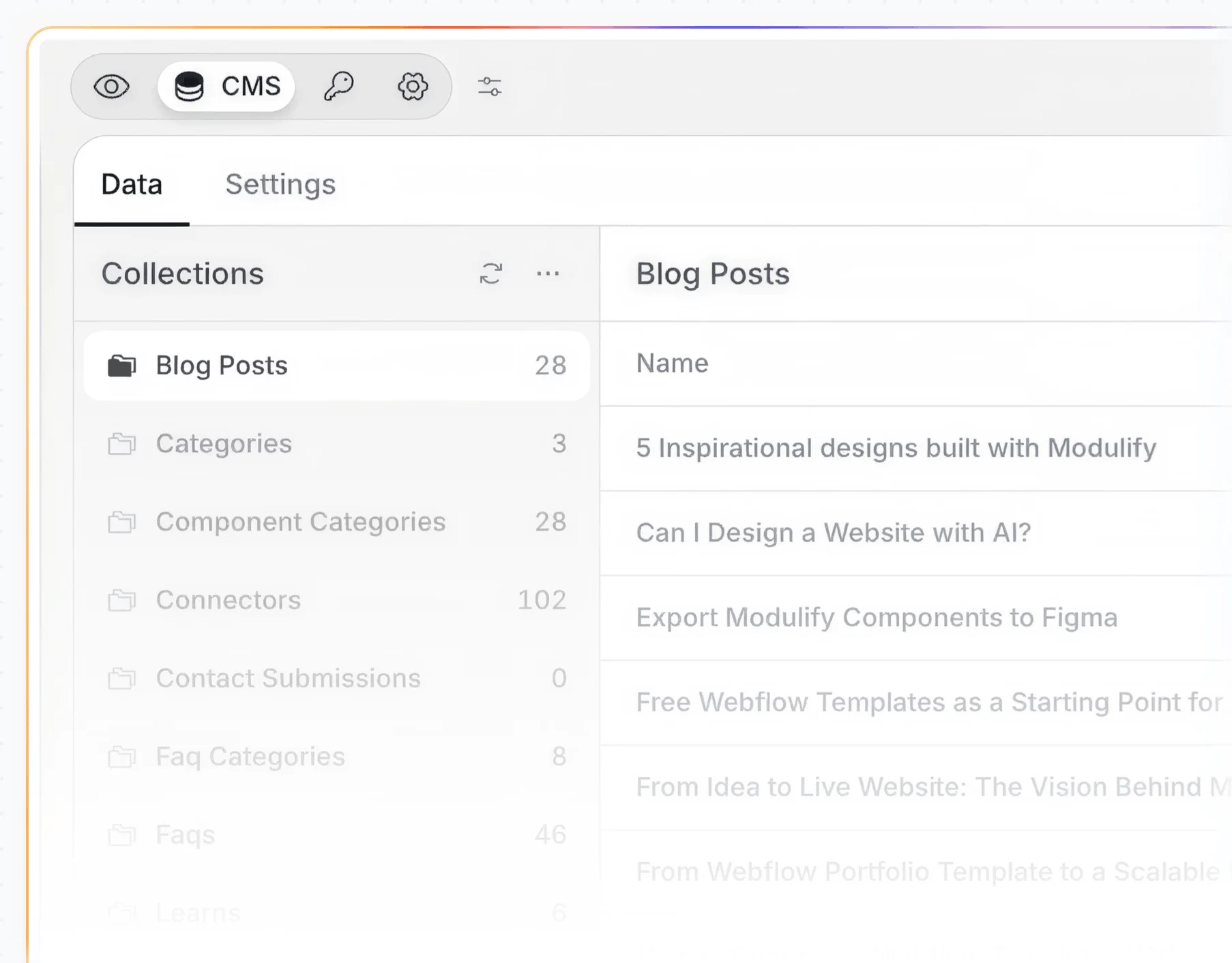
Content lives in a CMS
Posts, case studies, and page copy sit in structured collections. Marketing publishes without a deploy, and without asking anyone to open an editor.
Built to be found
Metadata, heading structure, social previews, and sitemaps come as part of the platform rather than as work you remember to do later.
The interesting question is who changes it in month four.
A generated codebase is genuinely impressive on day one, and it quietly becomes a maintenance job. Copy changes need someone who can edit code and deploy. Design drifts as each new page is generated fresh. SEO work turns into a backlog nobody owns. Modulify keeps the output inside a platform, so content sits in a CMS, pages reuse the same sections, and the person who wants a change is the person who makes it.
Real reasons to pick it, written without hedging.
A Git-native workflow
Branches, pull requests, code review, and local development, with the repository as the source of truth. If that is already how your team ships, Lovable fits it directly.
Anything you can code
When a requirement is unusual enough that no platform exposes it, having the source means you are never blocked by what the tool decided to support.
A developer workflow
Branches, review, local development, and your own deployment pipeline. If your team already works this way, it will feel natural rather than restrictive.
Included from the free plan up, not sold as separate services.
Marketing pages, a CMS your team edits, a database with real records, user accounts, and the dashboard or internal tool behind it. All of it in one project with one design system and one publishing flow, so nobody has to keep a codebase and a website in step with each other.
Start building
The questions teams ask when both demos looked good.
Who can change it after launch. Both generate real code and both let you take that code with you. With Lovable the codebase is the product and the code is where you work. With Modulify you also get the platform around it, so content sits in a CMS, pages reuse the same sections, and someone non-technical can keep the site moving. The first version looks similar in both. The difference shows up months later.
Yes. Paid plans export the full source, plus the database as CSV, JSON, or SQL and all your files, so nothing about a project is locked in. Lovable syncs to a repository continuously rather than on export, which suits teams who want to work in Git day to day. The difference that matters for most teams is not whether you get the code, it is whether you need to touch it to keep the site running.
Yes. Dashboards, client portals, trackers, admin panels, and internal tools run on the same platform, wired to a database, file storage, and user accounts. Because a project is a real server-rendered application, it can also call external services directly using an API key from the encrypted secrets vault.
Anyone on the team. Content lives in CMS collections, and page changes are described rather than coded, so a marketer can ship a campaign page without a developer, a pull request, or a deploy.
Modulify, for most teams, because the structure comes as part of the platform: metadata, headings, social previews, and sitemaps. You can absolutely achieve the same in a generated codebase, but it becomes ongoing work that someone technical has to own.
Yes. Paid plans export the full source as a zip, the database as CSV, JSON, or SQL, and your files as well. Nothing is trapped. Most teams find the reverse concern more common: they start with a codebase and later wish someone non-technical could edit it.
Describe your site or app and watch what comes back, then imagine editing it in month four.
Start building